Card V, Major ArcanaThe Hierophant tarot card meaning
Upright and reversedThe Hierophant in shortIn short
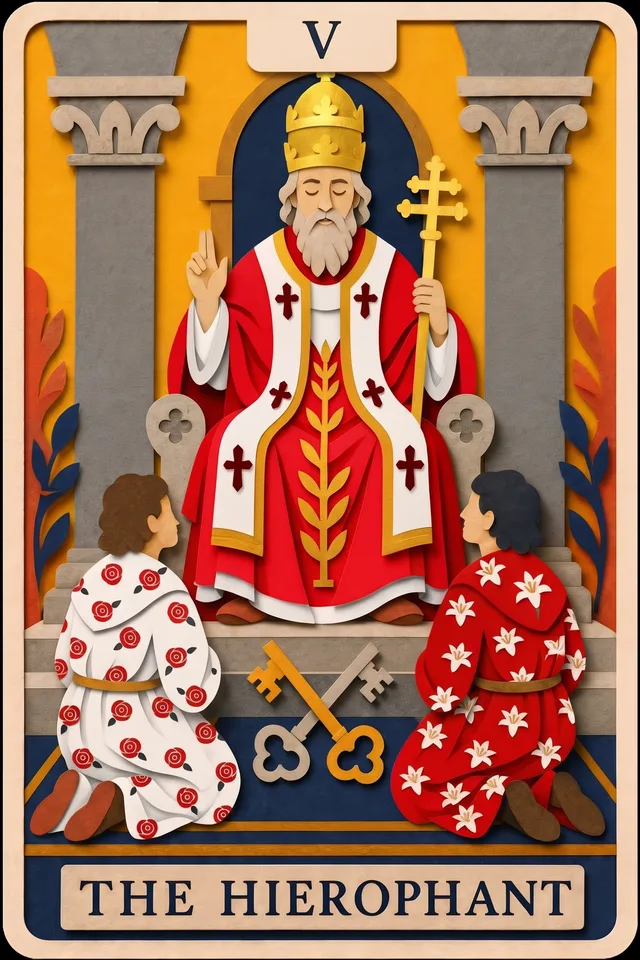
The Hierophant is tradition and teaching. A priest in a tall gold crown sits between two pillars and blesses two kneeling followers, crossed keys at his feet. Learn from what's been handed down, and find the teacher who fits you.
- Tradition
- Teaching
- Belief
Piece oneThe pillars
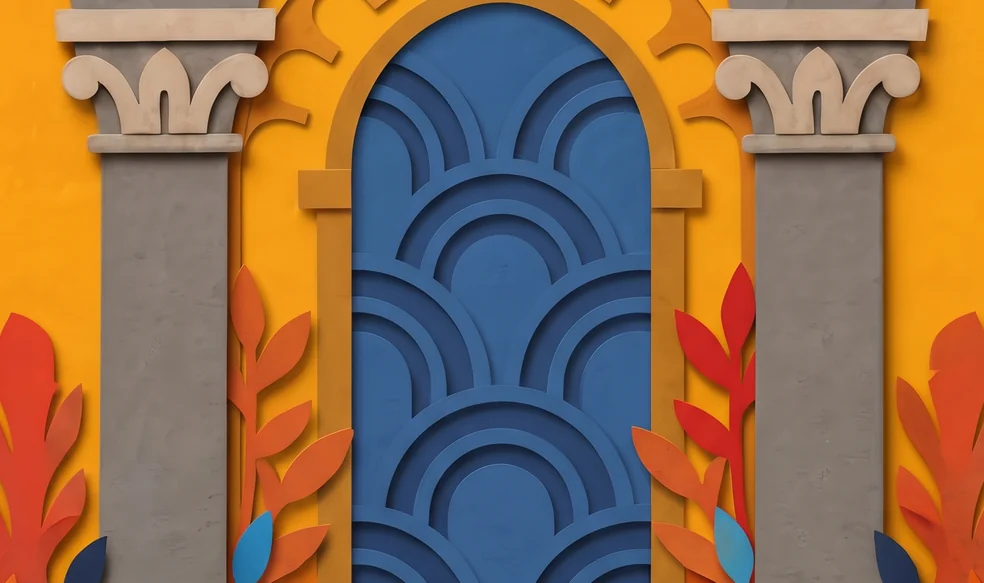
Two grey stone pillars flank his throne against a golden wall. Waite says they are a different pair from the Temple pillars of the High Priestess. Hers guard a hidden teaching. His frame a public church anyone can walk into.
"He wears the triple crown and is seated between two pillars, but they are not those of the Temple which is guarded by the High Priestess."Waite, 1911
Why it is hereThe pillars frame a public building. The High Priestess guards a hidden temple; he sits in the church everyone can enter. His blessing hand and the two kneeling ministers turn the space into a service. Grey stone says the teaching was built to last.
Piece twoThe blessing
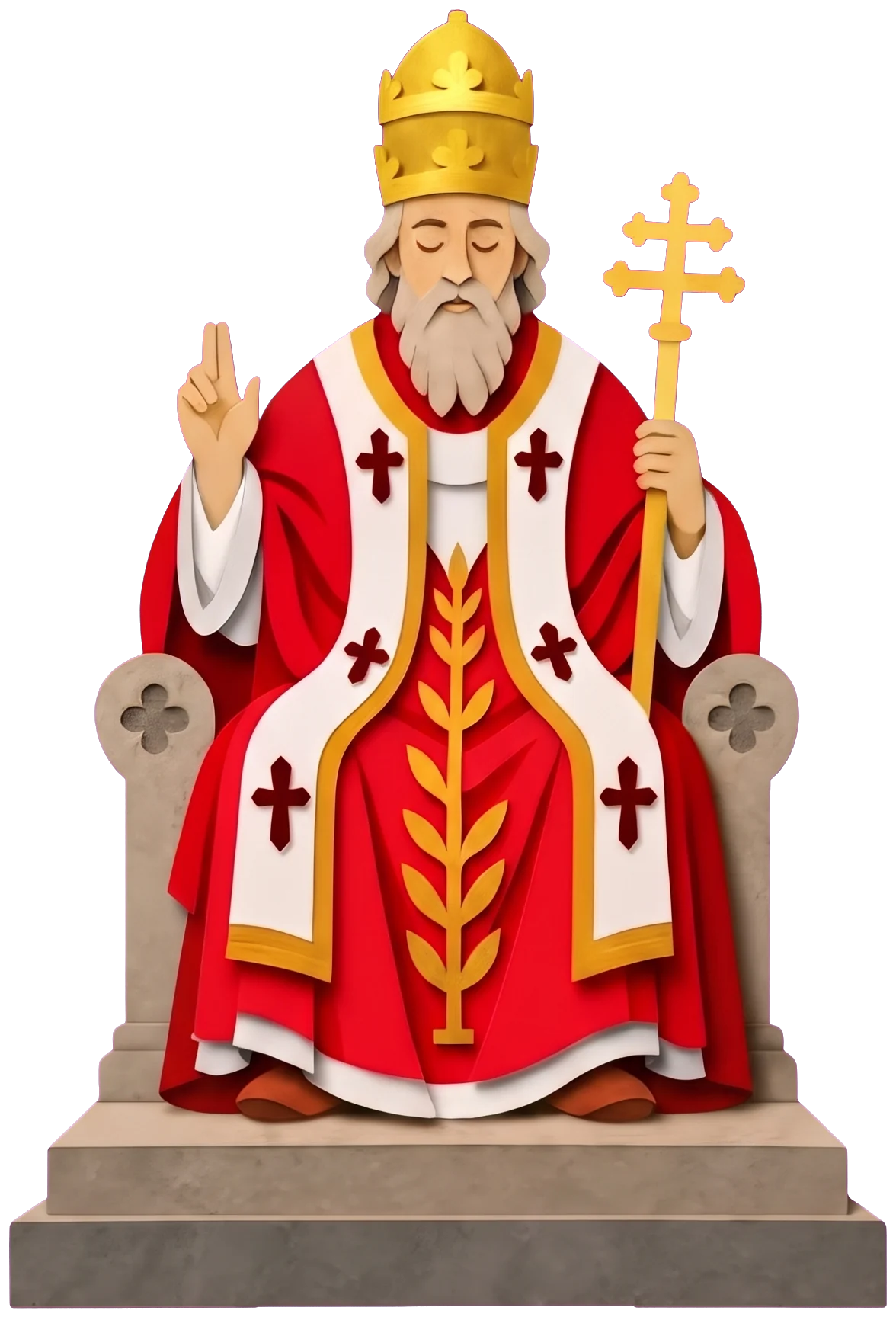
He wears a tall gold crown and raises his right hand, two fingers up, in blessing. Waite says the sign separates the open part of a teaching from the hidden part. He hands out the public, shared version.
"...with his right hand he gives the well-known ecclesiastical sign which is called that of esotericism, distinguishing between the manifest and concealed part of doctrine."Waite, 1911
Why it is hereThe raised hand is his teaching in one gesture. Two fingers up, two folded: part of the doctrine is shown and part held back. The ministers below receive the shown part. The keys at his feet decide who goes further.
Piece threeThe ministers
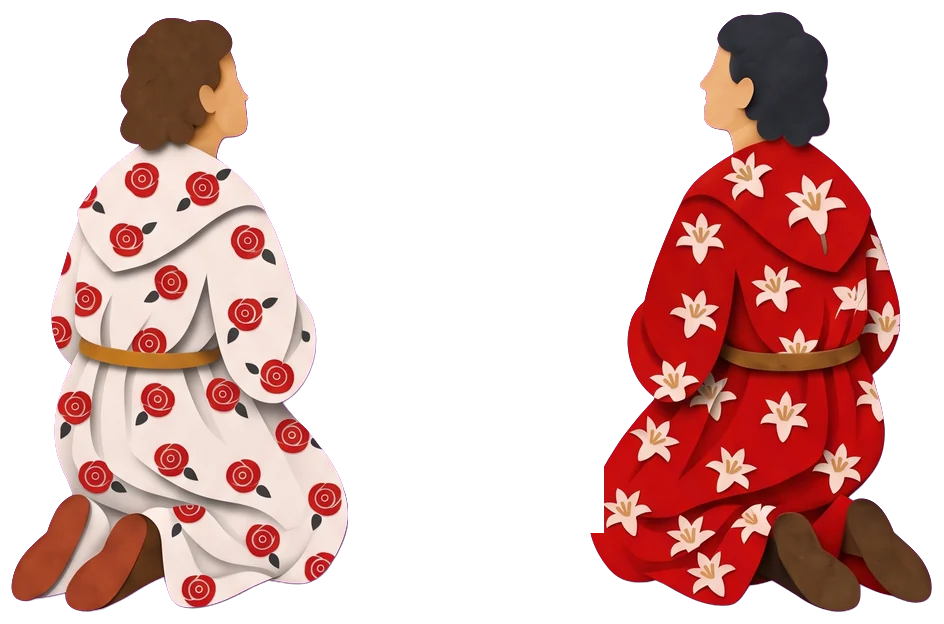
Two ministers kneel at his feet with their backs to you, looking up. One wears white with red roses, the other red with white lilies. They take in the teaching and pass it on.
"...two priestly ministers in albs kneel before him."Waite, 1911
Why it is hereThe ministers show where the teaching goes. They kneel with their backs to you, so you stand where they stand, looking up. They take what the blessing hands down and carry it out to others. The crossed keys lie on the step beside them.
Piece fourThe keys
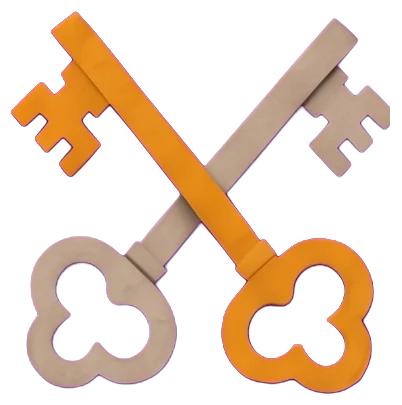
Two crossed keys lie on the step at his feet, one gold, one silver. Waite calls him the power of the keys: he opens or shuts the door to the accepted teaching.
"...the Hierophant is the power of the keys, exoteric orthodox doctrine, and the outer side of the life which leads to the doctrine"Waite, 1911
Why it is hereThe keys are his office. He opens the door to the accepted teaching or keeps it shut. They lie on the step at his feet, below the blessing hand, between the two ministers. Gold and silver make two keys for two doors: the teaching everyone hears and the one kept back.
Colour, and where else it appearsEchoes
-
The pillars
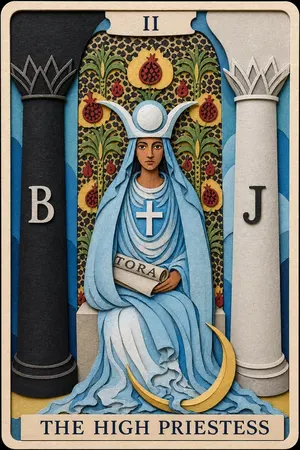
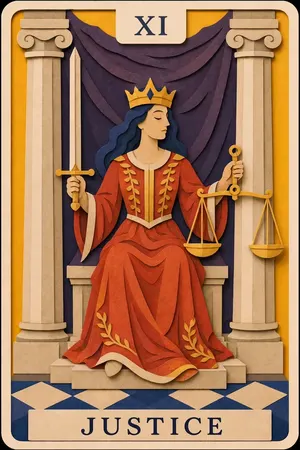
Plain grey stone on bright gold: the building lasts, the ceremony shines. The High Priestess sits between two pillars marked B and J, one black, one white, with a veil behind. Justice sits between two cream columns hung with a purple curtain. Here neither pillar is dark or light. Both are the same grey, open to all.
Also in -
The blessing
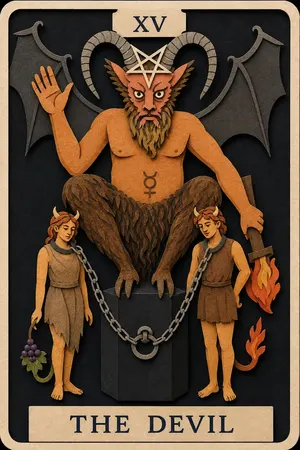
Bright gold crown, red robe, white stole: a church in full ceremony. The Devil raises his right hand too, palm open, above two figures at his feet. The layout matches. His pair wear chains, and the Hierophant's kneel by choice.
Also in -
The ministers
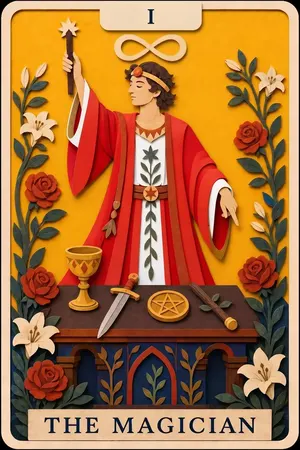
White with red roses, red with white flowers: each wears the other's colours. The same pair of flowers grows around The Magician, roses and lilies climbing both sides of his card. There they bloom in a garden around one man's skill. Here they're sewn onto the clothes of two men who serve.
Also in -
The keys
A gold key and a silver one on deep navy: one warm, one cool. The gold matches his crown and the gold wall behind the pillars. The silver picks up the grey stone around him. Crossed on the bottom step, the keys are the closest thing on the card to you, and they stay at his feet.
Colour notes are ours, read from the picture; Waite does not explain the colours.
The HierophantUpright
Tradition, teaching, shared belief. Schools, religions, institutions, and the people who hand knowledge down. Waite's words: marriage, alliance, captivity, servitude, and by another account mercy, goodness and inspiration.
It often shows a teacher, mentor or advisor, the man you turn to, in Waite's phrase. Learn the rules before you change them, and respect the people who came before. Waite's list carries a warning: a tradition followed without thought turns into a cage.
The HierophantReversed
Waite gives society, good understanding, concord, over-kindness and weakness. People get along easily, maybe too easily.
You might be going along to keep the peace, or be too soft to say no. It can also mark a break with convention, your own way instead of the accepted one. Be kind and keep your own judgement.
Yes or noYes, by the book.
Yes, if you follow the accepted way: the rules, the proper steps, good advice. Skip the shortcuts.
The Hierophant in your lifeIn your life
Love
Commitment, marriage, or a traditional relationship. Shared values count for more than passion.
Work
Institutions, training, mentors. Follow the process and learn from someone who's done it.
Money
Play it safe: banks, advisors, proven methods. Skip the unusual schemes.
Health
Trust established care and get professional advice. A card can't diagnose you; if something's wrong, see a doctor.
Spirituality
A teacher, a tradition, a community of faith. A framework helps you now.
Advice
Learn from those who came before. Ask for guidance.
As a person
A teacher, priest, mentor or advisor. Values rules, tradition, belonging.
Past, present, future
Past: an upbringing, a school or a faith that shaped you. Present: you need guidance, or a commitment. Future: a teacher, a vow, a place in a community.
Written by us, from Waite's meanings and the picture.
Symbols and correspondencesAt a glance
- Number
- V
- Hebrew letter
- Vav
- Astrology
- Taurus
- Element
- Earth
- Upright
- Marriage
- Reversed
- Society
QuestionsCommon questions
Generally, yes: guidance, teaching, commitment. Its shadow is rigidity, rules followed blindly.
Commitment and shared values. Waite's first word for it is marriage.
Yes, if you go the proper way and get good advice.
Waite calls the Hierophant the power of the keys: the outer, orthodox teaching and the life that leads to it.
Taurus, an earth sign, in the Golden Dawn system. Its Hebrew letter is Vav.
Waite calls him the ruling power of external religion and head of the recognized hierarchy. He carries grace to the world of institutions, the outer side of what the High Priestess keeps hidden.
The Pictorial Key to the Tarot, 1911Card meanings and quotes: A. E. Waite, The Pictorial Key to the Tarot, 1911. Hebrew letter, sign and element: the Golden Dawn's Book T. Colours, life situations, yes or no and questions: written by us, from Waite's meanings and the picture.
All 22 major cards