IV, Suit of SwordsFour of Swords tarot card meaning
Upright and reversedFour of Swords in shortIn short
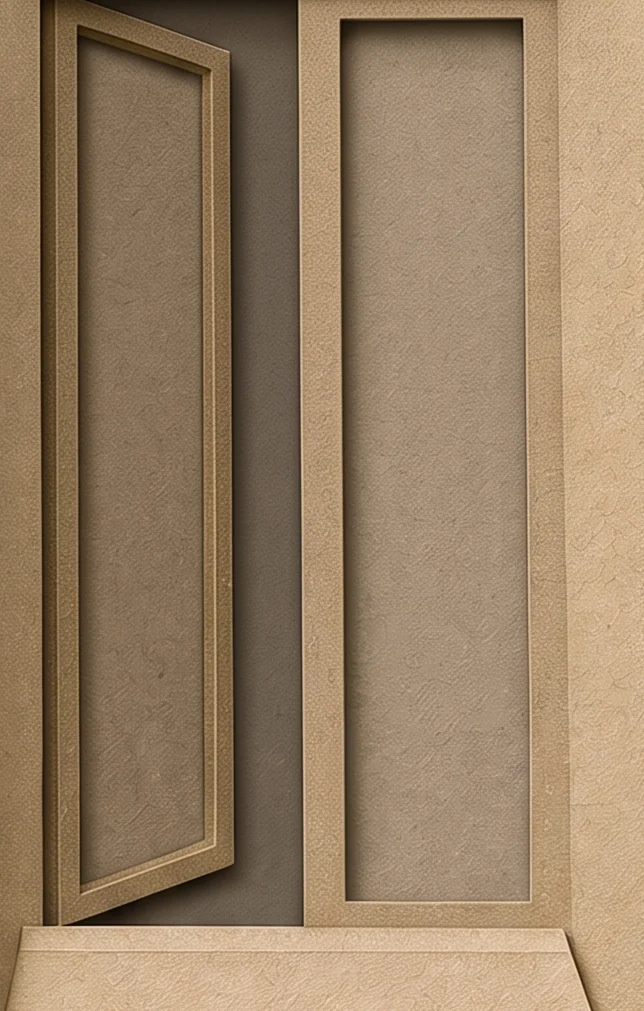
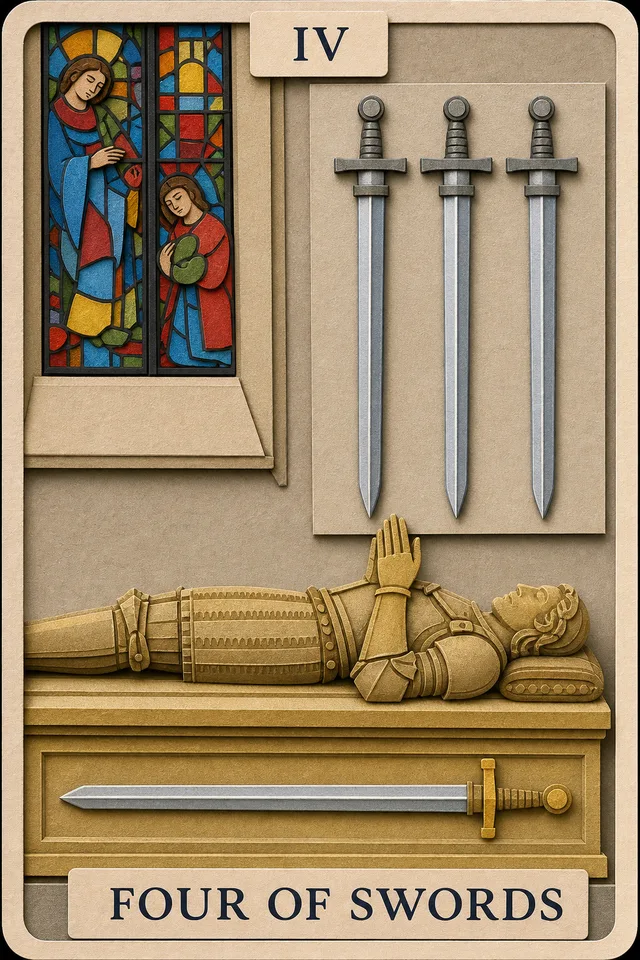
The Four of Swords is rest after a fight. A stone knight lies on his tomb, hands joined in prayer, three swords on the wall above and one along the tomb. Stop, step back, and let yourself recover.
- Rest
- Retreat
- Recovery
Piece oneThe window
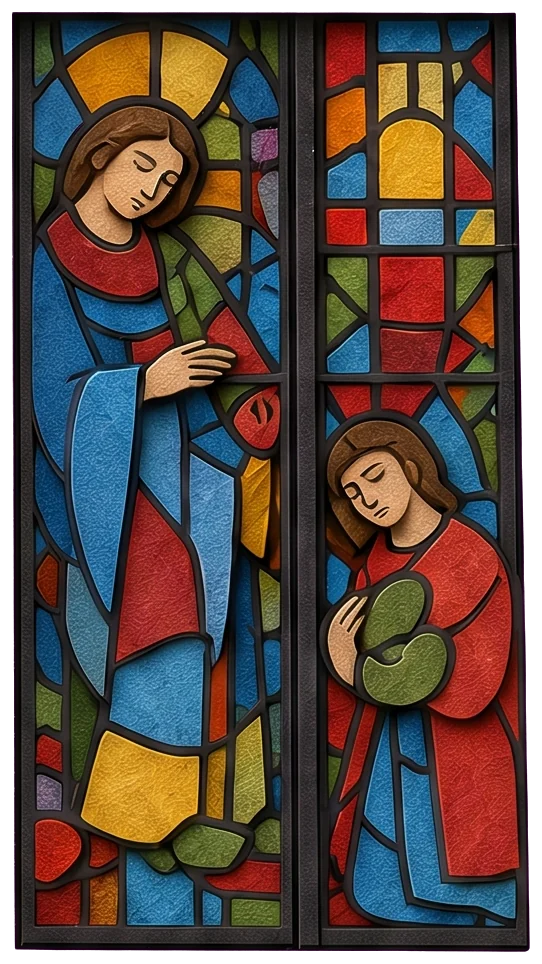
A stained glass window shows a tall figure raising a hand toward someone kneeling. You're inside a church, a place of quiet and blessing. Waite doesn't describe the window; his meanings speak of vigilance, retreat, solitude.
"Vigilance, retreat, solitude, hermit's repose, exile, tomb and coffin."Waite, 1911
Why it is hereThe window tells you where you are: a church, a place for rest and prayer. Its picture of a standing figure raising a hand toward someone kneeling matches the knight below, hands joined in prayer. It's also the only way light gets in. The rest of the card is still stone and steel; the window keeps it from turning into a cell.
Piece twoThe three swords
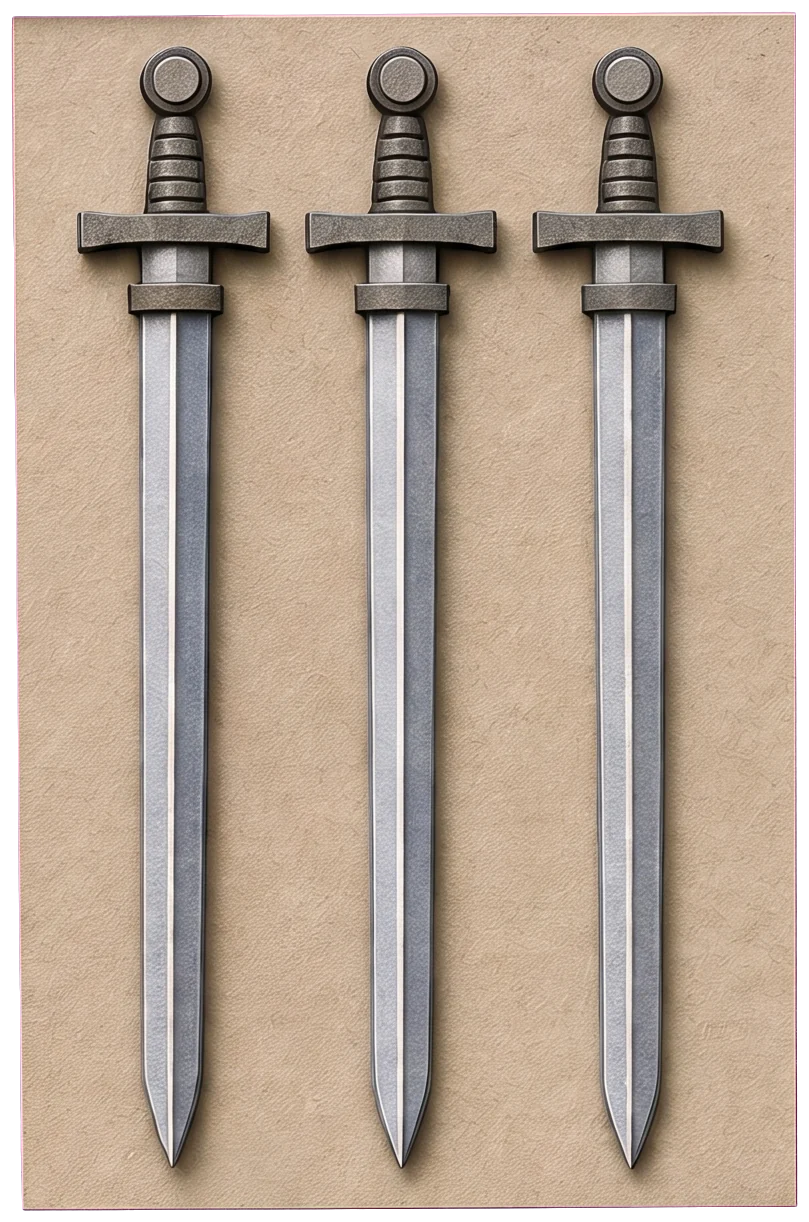
Three swords hang point down on the wall above him, out of reach. The fight is put away for now. The swords rest too.
Why it is hereThe three swords on the wall are the fights he's done with for now. They hang points down, out of reach, the way a soldier hangs up his gear. With the fourth laid along the tomb, all four are accounted for, and none is in his hand. The knight below can rest because the swords are put away.
Piece threeThe knight on the tomb
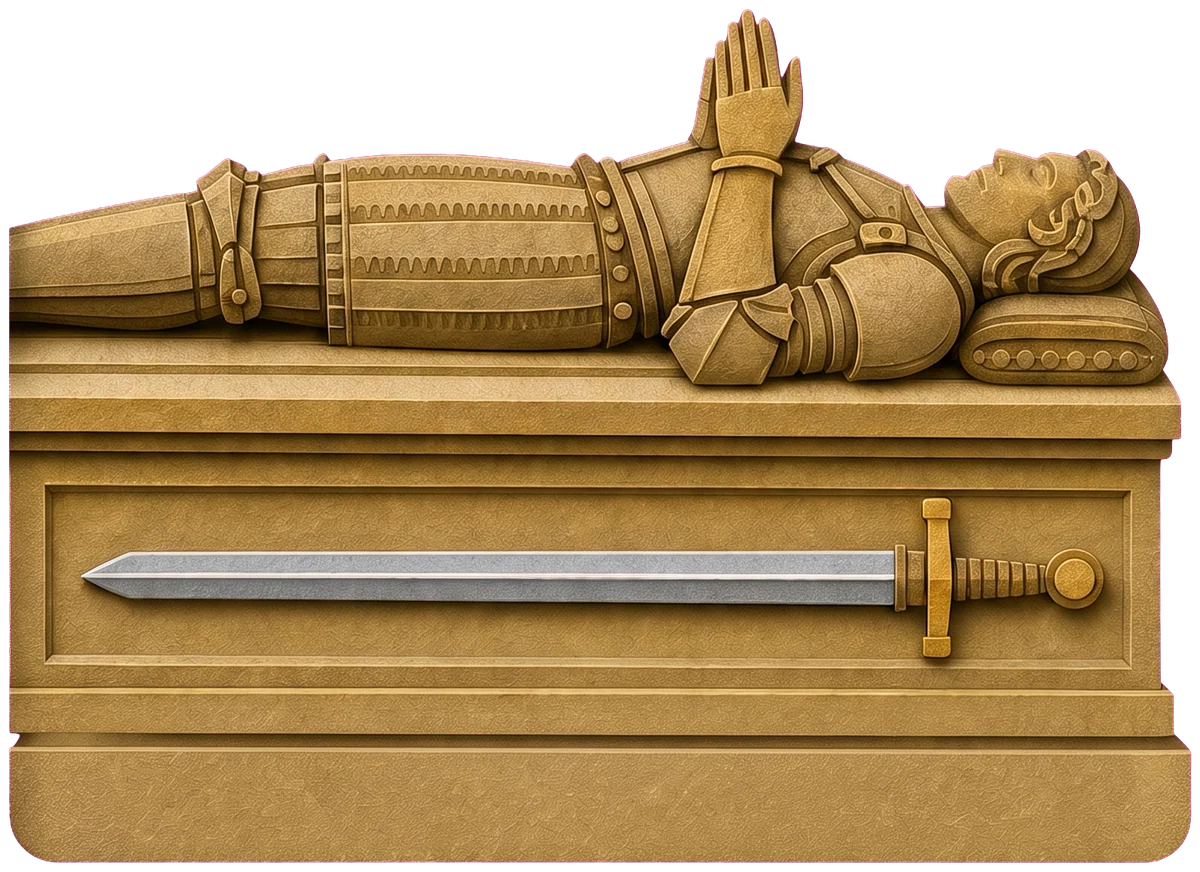
A knight in armour lies full length on his tomb, hands pressed in prayer, head on a cushion. He is a carved effigy. Waite reads retreat, solitude, a hermit's rest.
"The effigy of a knight in the attitude of prayer, at full length upon his tomb."Waite, 1911
Why it is hereThe knight is the rest the card is about. He lies in full armour, hands joined, a cushion under his head: the fight is over, but he's still dressed for it. He's carved stone on a tomb, which makes the rest long and deep. The swords above and beside him wait with him, and the window watches over all of it.
Piece fourThe sword on the tomb
The fourth sword lies flat along the side of the tomb, carved into the stone. Waite says the tomb and coffin in his meanings suggested the design. The last sword is laid down, and the knight rests beside it.
"It is these last that have suggested the design."Waite, 1911
Why it is hereThe fourth sword is the one he set down. It runs flat along the side of the tomb, parallel to the knight, so the rest has a shape: a man lying down, a sword lying down. The three on the wall hang upright and wait. This one lies level with him, put away for good, or until he wakes.
Colour, and where else it appearsEchoes
-
The window
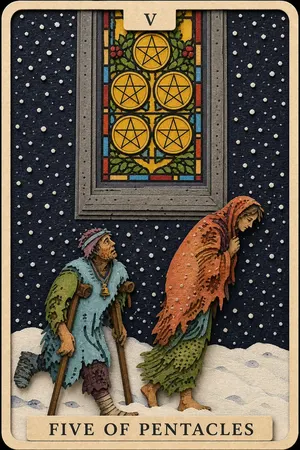
Deep blue and red glass, the brightest colour on the card. Light gets in, even here. The Five of Pentacles has a lit stained glass window too, but two poor figures pass under it outside, in the snow. On that card the glass marks a warm place they don't enter. Here you're already inside, and the warmth reaches the tomb.
Also in -
The three swords
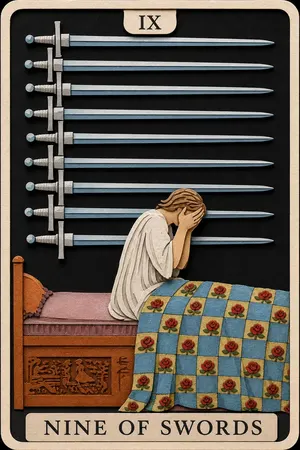
Cool steel on warm stone, plain beside the bright glass. Swords on a wall come back in the Nine of Swords, where nine lie flat across a black wall over a woman awake in bed. There they hang over her like thoughts that won't stop. These three hang still in daylight, above a man at rest.
Also in -
The knight on the tomb
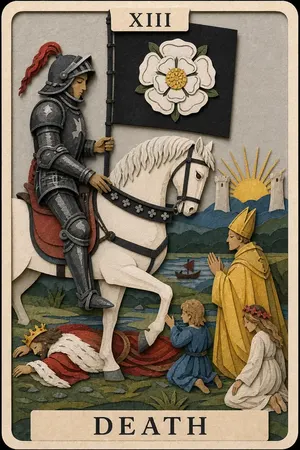
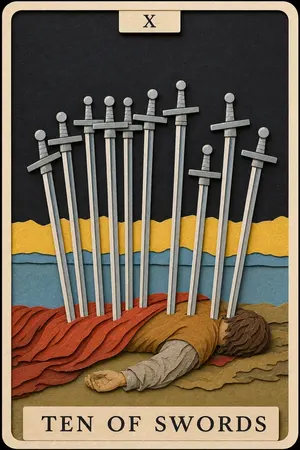
Old gold stone on pale sand walls, warm and quiet, a church in afternoon light. Armoured men come back across the deck. Death rides in black armour on a white horse, very much awake. In the Ten of Swords a man lies face down, pierced by every sword. This knight lies flat too, but in stone, hands joined, with no blade touching him.
Also in -
The sword on the tomb
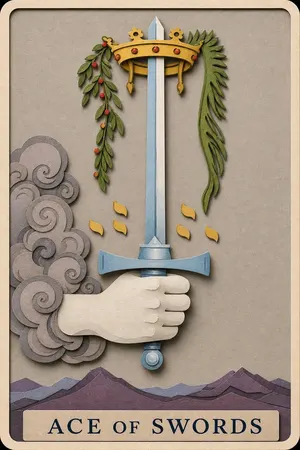
Silver steel on dark gold stone, with a gold hilt. The sword almost melts into the tomb. Compare the Ace of Swords, where one blade stands straight up in a hand from a cloud, a crown ringing its point. That's the sword at its most alive. Here the same shape lies on its side, carved into stone and out of use.
Also in
Colour notes are ours, read from the picture; Waite does not explain the colours.
Four of SwordsUpright
Rest, retreat, recovery. Waite's words: vigilance, retreat, solitude, hermit's repose, exile. After a fight or a long strain, step away and be quiet.
A pause. Sleep, take time alone, heal. The swords will still hang on the wall once you're ready.
Four of SwordsReversed
Waite's words: wise administration, circumspection, economy, avarice, precaution, testament. Rest is over; you return to practical matters with care.
Careful planning and good management, or holding on too tight. Sometimes wills, and affairs left behind.
Yes or noNot yet.
Not yet. Pause first. The answer gets clearer once your strength is back.
Four of Swords in your lifeIn your life
Love
A quiet spell, or space to recover. Rest before you fix anything.
Work
Take a break, a holiday, a slower week. Burnout is the risk.
Money
Hold steady. Skip big moves; review and plan quietly.
Health
Rest and recovery. A card can't diagnose you; if something's wrong, see a doctor, and give healing real time.
Spirituality
Retreat, prayer, silence. Meditate, or go away for a few days.
Advice
Stop and rest. No fighting today.
As a person
Quiet, withdrawn, recovering. Needs time alone.
Past, present, future
Past: a time you withdrew to recover. Present: rest. Future: a pause that gives your strength back.
Written by us, from Waite's meanings and the picture.
Symbols and correspondencesAt a glance
- Suit
- Swords
- Element
- Air
- Astrology
- Jupiter in Libra
- Sephira
- Chesed
- Upright
- Vigilance
- Reversed
- Wise administration
QuestionsCommon questions
Mostly yes: rest and recovery after a hard time. It turns hard only if you refuse to stop.
A pause, or time apart to recover. Breathe and heal before you decide anything.
Not yet. Rest, then ask again.
No. Waite calls him an effigy, a carved figure praying on a tomb. The card means rest and retreat, and he pictures stillness.
Jupiter in Libra, an air sign, in the Golden Dawn system. Jupiter brings ease, a fit for a card of rest.
Waite sees a stone knight praying on his tomb: vigilance, retreat, solitude, a hermit's rest. The tomb and coffin in those meanings, he says, gave the picture.
The Pictorial Key to the Tarot, 1911Card meanings and quotes: A. E. Waite, The Pictorial Key to the Tarot, 1911. Element, decan and sephira: the Golden Dawn's Book T. Colours, life situations, yes or no and questions: written by us, from Waite's meanings and the picture.
All 14 Swords