X, Suit of SwordsTen of Swords tarot card meaning
Upright and reversedTen of Swords in shortIn short
The Ten of Swords is rock bottom. A man lies face down with ten swords driven into him, under a black sky with a band of yellow light low over the water. Something painful has ended, and you can't fall any lower.
- Endings
- Rock bottom
- Pain
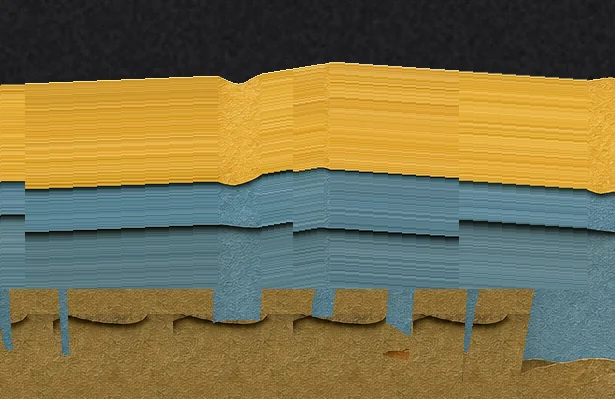
Piece oneThe yellow light
Behind the swords, between black sky and blue water, runs a wide band of yellow light. Waite doesn't explain it. Many readers see the first light after the night: the worst has happened, and day comes next.
Why it is hereThe yellow light is the card's way out. It runs between the black sky and the water, right behind the swords, so the eye passes through the blades to reach it. The man lies with his back to it. The worst has happened, and the light says the night still ends.
Piece twoThe fallen man
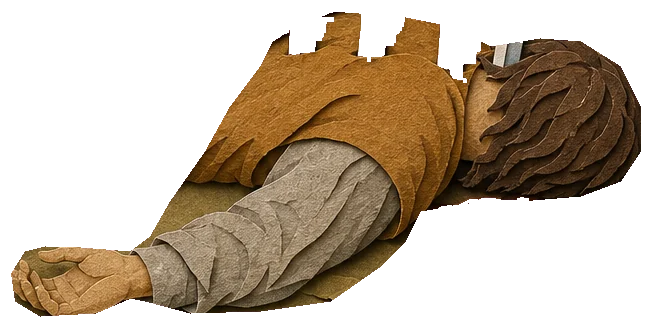
A man lies face down, one arm out, his hand open on the ground. Waite insists the card rarely means violent death. It means pain, tears, desolation: the moment you hit the ground.
"It is not especially a card of violent death."Waite, 1911
Why it is hereThe man is the end of the story the swords tell. He lies face down, arm out, hand open, so there's no fight left in him. Every sword on the card ends in him. Waite warns against reading violent death into it. The open hand is calmer than the blades: whatever he held, he's let go.
Piece threeThe red cloak
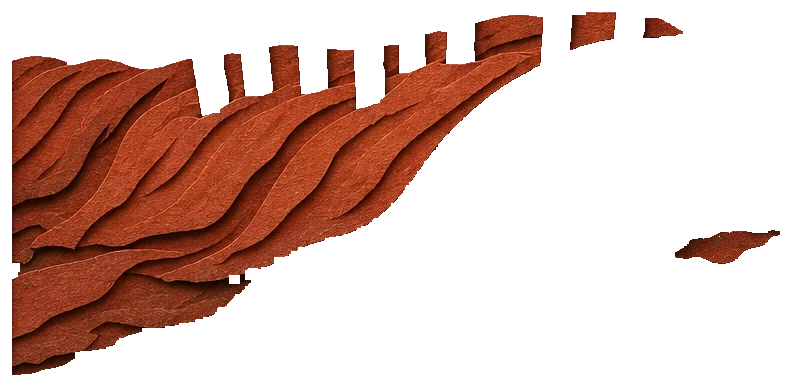
A red cloak covers his legs, crumpled in folds on the ground, blades sunk into it. Waite doesn't mention it. In our picture it's the strongest colour on the card.
Why it is hereThe cloak is the warmest thing on the card, and it covers him like a sheet. The swords sink into its folds, so the cloak takes the blows along with the body. Red keeps the scene alive. Against the black sky and pale blades, it says there's still blood and heat in the man under them.
Piece fourThe ten swords
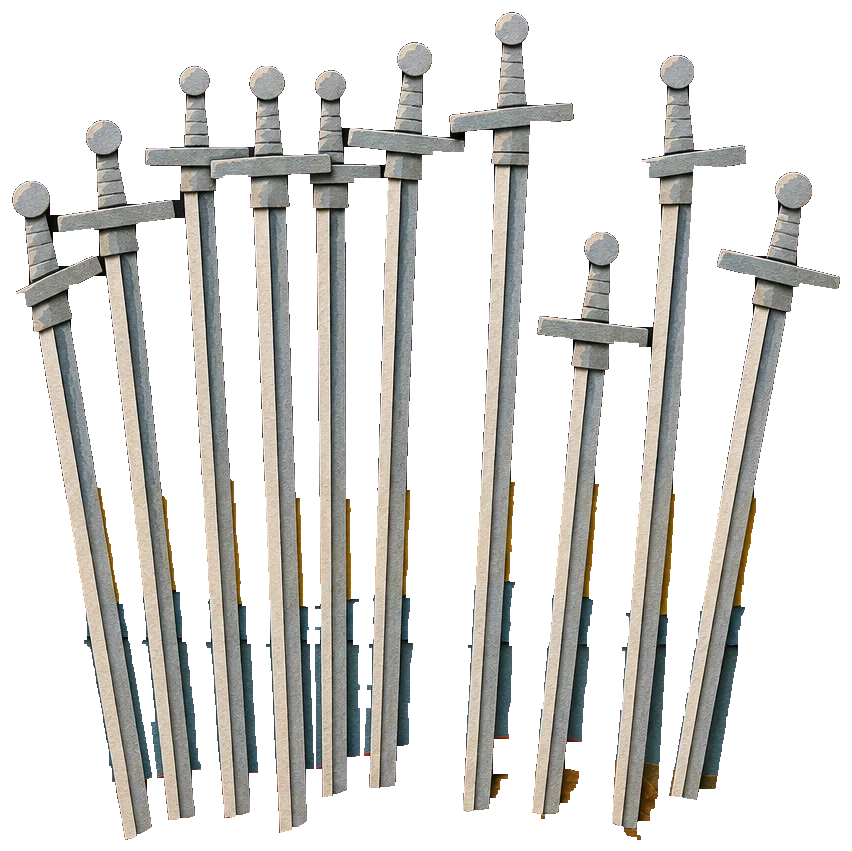
Ten swords stand in a ragged row, all driven into the fallen man. Waite says every sword of the card pierces him. Every blow lands at once, the last in a long series.
"A prostrate figure, pierced by all the swords belonging to the card."Waite, 1911
Why it is hereTen is the end of the count, and here every sword has landed. The blades stand in a ragged row from the man's back up into the dark sky, the full suit in one body. Nothing is left to fall. The yellow light just below them is the next thing after the last blow.
Colour, and where else it appearsEchoes
-
The yellow light
Warm yellow and calm blue under the black: the card keeps its only bright colours on the horizon. Death shows a sun on the far horizon while a king lies on the ground. In Temperance a gold sun shines at the end of a path behind the angel. Here the light has no sun yet, only a band of yellow.
Also in -
The fallen man
An ochre tunic on olive earth: he nearly blends into the ground. Death has a fallen king lying under the horse's hooves. The Four of Swords lays a knight flat on a tomb, hands joined, at rest. That man rests by choice, with one sword at his side. This one fell, and all ten are in him.
Also in -
The red cloak
Deep red folds, darker in the shadows: pain, and the life still in him. A red cloak walks away in the Eight of Cups, on a figure leaving at night with a staff. The Eight of Swords wraps a woman in a red dress under grey bonds. Each time, red marks someone still alive under the weight.
Also in -
The ten swords
Grey steel on a black sky: the top half is as dark as the Nine. The Three of Swords drives three blades through a heart in the rain. The Nine of Swords hangs nine over a woman's bed, never touching her. Here the swords come down, all ten at once, and then there are none left to fear.
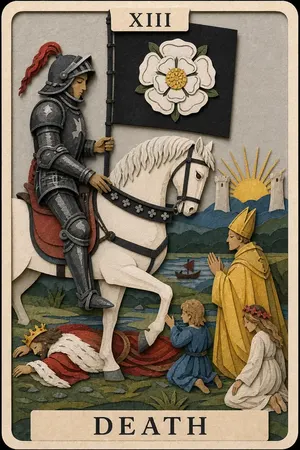
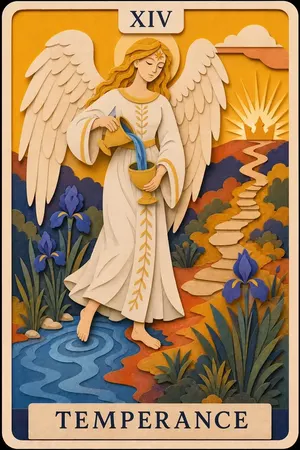
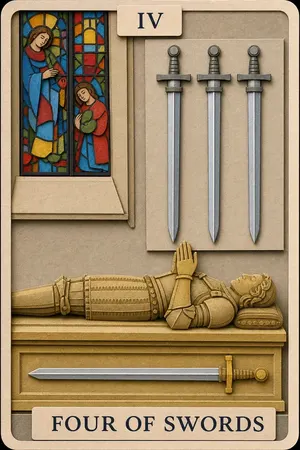
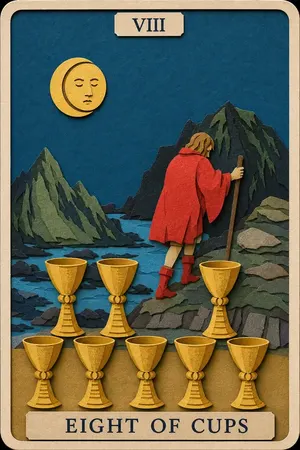
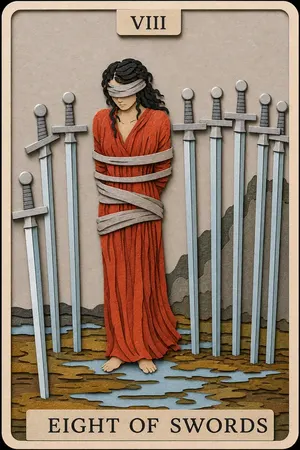
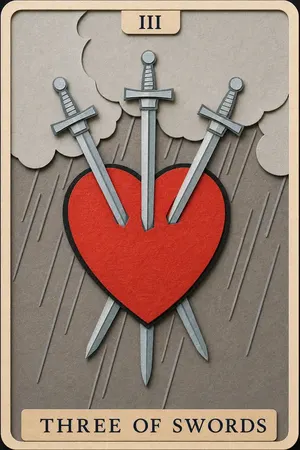
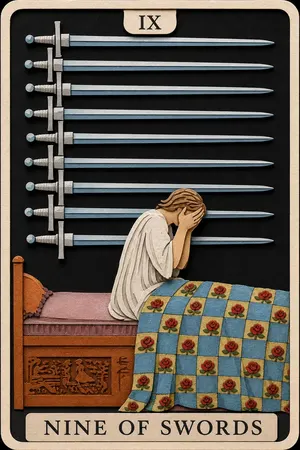
Colour notes are ours, read from the picture; Waite does not explain the colours.
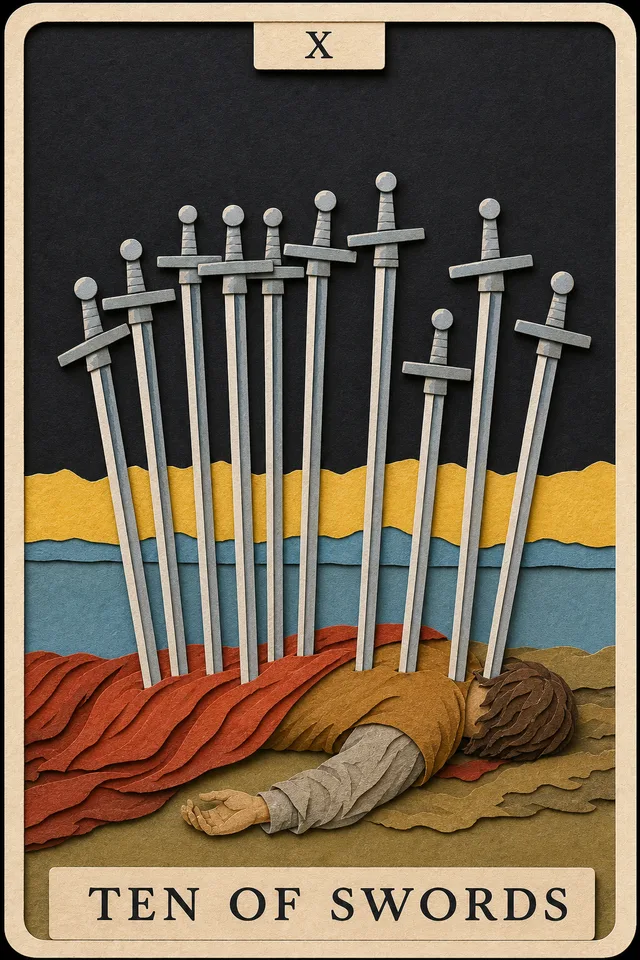
Ten of SwordsUpright
An ending that hurts: a loss, a defeat, a betrayal, or the end of a long struggle. Waite's words: pain, affliction, tears, sadness, desolation, and whatever the picture suggests.
It's also the bottom. Ten closes the suit, and nothing more can fall. Many readers find relief here. The thing you feared has happened, and from here you rise.
Ten of SwordsReversed
Waite gives advantage, profit, success, favor, power and authority, and adds that none of them lasts.
Things pick up after the fall and you gain ground. Enjoy it, and build carefully. A recovery that leans on luck can slip.
Yes or noNo.
No. This one has run its course. Let it go and start again.
Ten of Swords in your lifeIn your life
Love
A painful end, or a relationship that has run its course. Grieve it, then let go.
Work
A project, job or plan that has failed or ended. Take stock, rest, start again on firmer ground.
Money
A low point with money. Face the full picture. From the bottom, every step counts as progress.
Health
Exhaustion, and a need for real rest. A card can't diagnose you; if something's wrong, see a doctor.
Spirituality
An old self ends. Let the old way go and a new one has room.
Advice
Accept that it's over. Stop fighting what already happened and turn toward the light.
As a person
Someone worn out by a long struggle, or someone who casts themselves as the victim.
Past, present, future
Past: a painful ending you survived. Present: the bottom, nothing more to lose. Future: a slow rise and a new day.
Written by us, from Waite's meanings and the picture.
Symbols and correspondencesAt a glance
- Suit
- Swords
- Element
- Air
- Astrology
- Sun in Gemini
- Sephira
- Malkuth
- Upright
- Pain
- Reversed
- Advantage
QuestionsCommon questions
It's a painful card of endings and defeat. It's also the bottom, the end of the suit. Things can only improve from here.
A painful ending, or a clear sign it's over. Grieve, then move on.
No. It's ended. Look for a new start.
Waite says it rarely means violent death. It speaks of pain, tears and endings.
The Sun in Gemini, in the Golden Dawn system. Gemini is an air sign, like the suit.
Waite shows a figure lying flat, pierced by all ten swords. The card means what you see, pain and tears, and seldom a violent death.
The Pictorial Key to the Tarot, 1911Card meanings and quotes: A. E. Waite, The Pictorial Key to the Tarot, 1911. Element, decan and sephira: the Golden Dawn's Book T. Colours, life situations, yes or no and questions: written by us, from Waite's meanings and the picture.
All 14 Swords