VI, Suit of SwordsSix of Swords tarot card meaning
Upright and reversedSix of Swords in shortIn short
The Six of Swords is moving on. A ferryman poles a boat across the water, a hooded woman and a child aboard, six swords standing upright beside them. A quiet trip away from trouble, toward calmer days.
- Passage
- Moving on
- Transition
Piece oneThe far shore
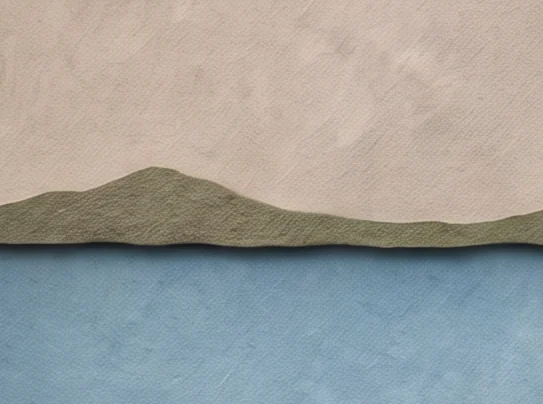
A low grey-green shore lies across calm water. Waite reads a journey by water, a route, a way. The shore is far off. You are on the way, and the water is calm.
"...journey by water, route, way, envoy, commissionary, expedient."Waite, 1911
Why it is hereThe far shore is the reason for the trip. It's low and grey green, a place you can see but haven't reached. The ferryman's pole and the calm water ahead both point toward it. The passengers sit with their backs to you, facing where they're going. The card is the crossing, and the shore keeps it hopeful.
Piece twoThe six swords
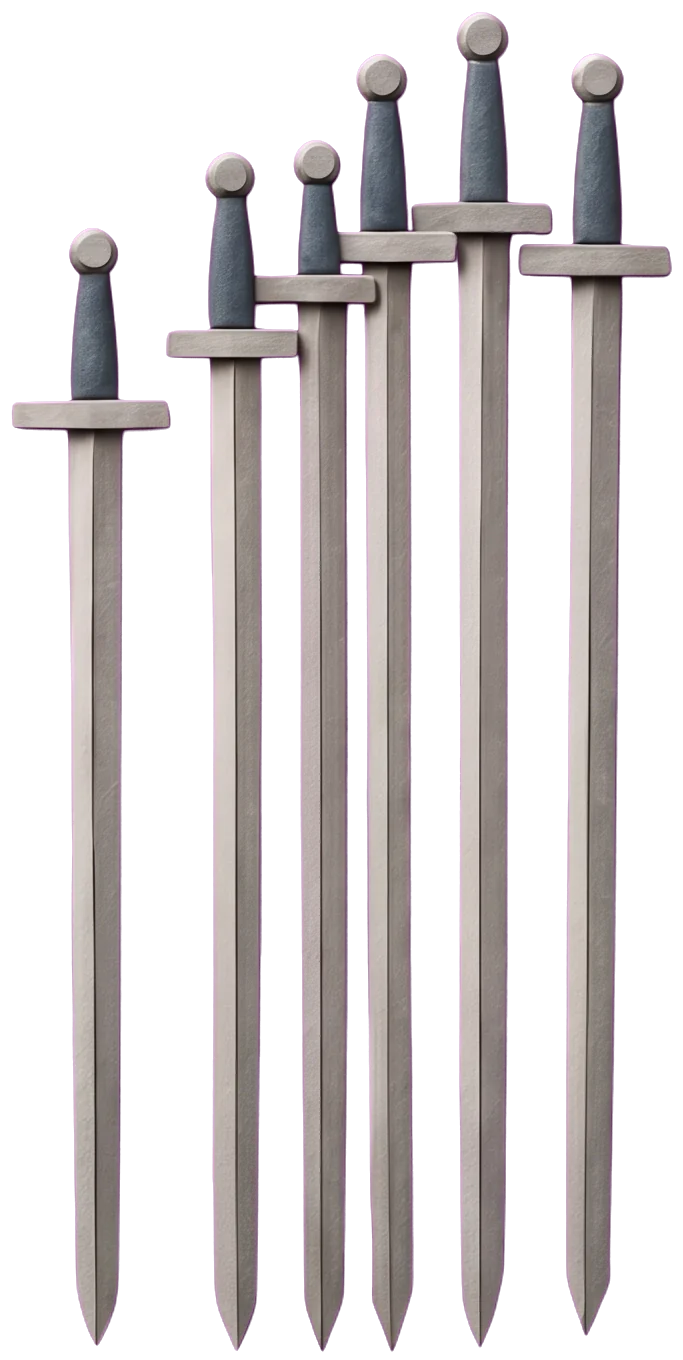
Six swords stand upright in a row beside the passengers. The troubles come along, packed away and still. They point at no one now.
Why it is hereThe swords are the trouble the passengers bring along. They stand upright in the boat, in a row beside the woman and the child. Nobody holds them and they point at no one. The passengers can leave one shore behind, but they carry the past with them to the next one.
Piece threeThe ferryman
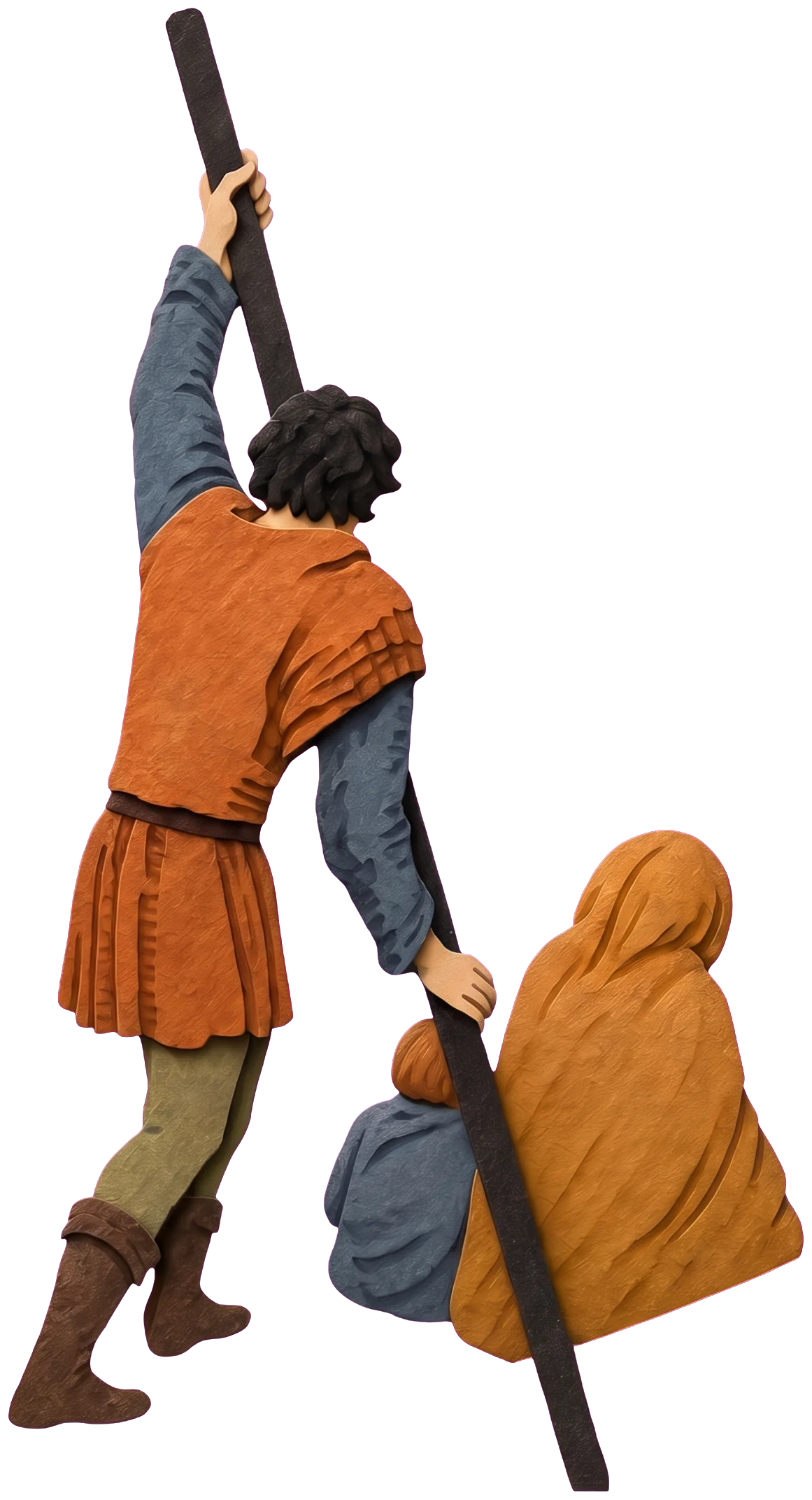
A young man in an orange tunic stands in the boat and pushes it along with a long pole. Waite calls him a ferryman taking passengers to the further shore. He works so they can rest.
"A ferryman carrying passengers in his punt to the further shore."Waite, 1911
Why it is hereThe ferryman makes the crossing possible. He stands while the others sit, pushing with a long pole, and all the effort on the card is in his arms. Waite notes the load is light and the work within his strength. The passengers rest, the swords stand still, and he keeps the boat moving toward the far shore.
Piece fourThe boat and the water
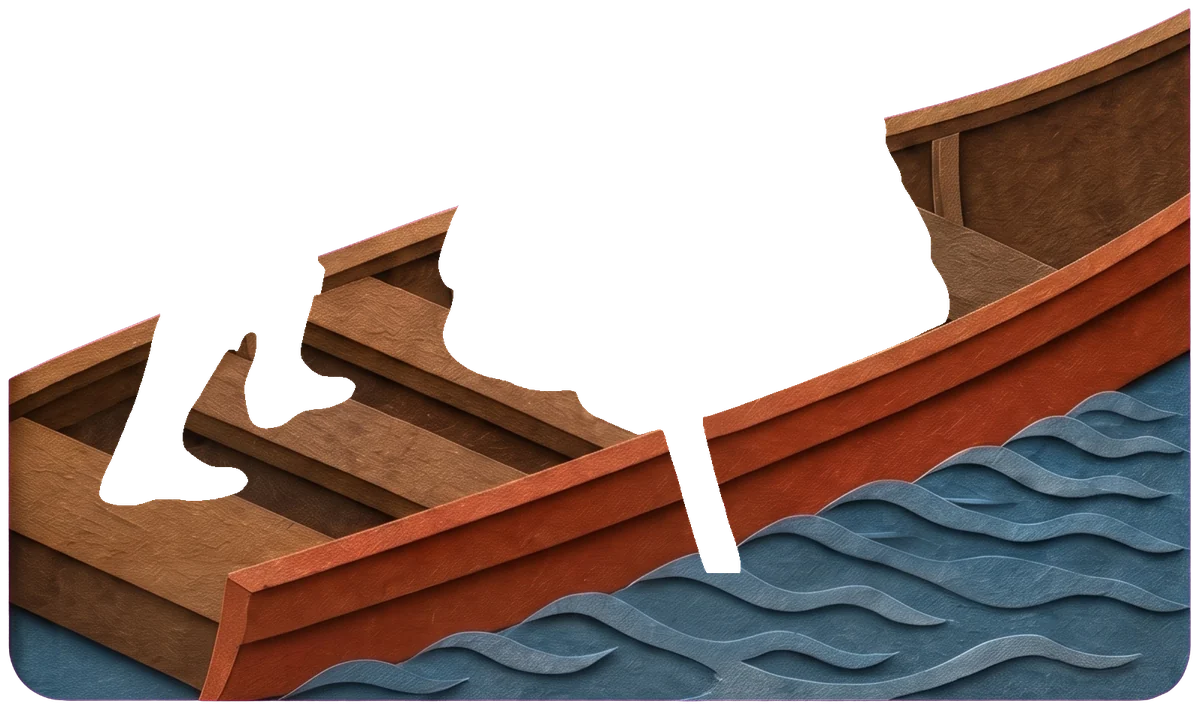
Small waves curl beside the boat, and the water ahead lies flat. Waite says the course is smooth. The rough water stays at the edge; the way across is quiet.
"The course is smooth..."Waite, 1911
Why it is hereThe boat holds everything else on the card: the ferryman, the passengers and the six swords. On the right the water curls into small waves, and ahead it lies flat. The boat sits between the rough part and the calm, and that move from one to the other is the whole card.
Colour, and where else it appearsEchoes
-
The far shore
Pale grey sky, soft blue water, grey green shore: washed out, more relief than joy. Distant shores come back in the Three of Wands, where a man on a cliff watches ships on gold water. He watches others travel; these passengers make the trip themselves. In the Eight of Cups a figure leaves on foot toward dark mountains, alone. Here someone else does the work.
Also in -
The six swords
Pale steel on pale water: the swords nearly vanish into the calm. Upright swords return in the Eight of Swords, standing in mud around a bound woman like a fence. In the Seven of Swords two blades stay stuck in the ground while a thief runs off with five. These six stand still and travel with the boat, with no hand on them.
-
The ferryman
Burnt orange and slate blue: the strongest colour belongs to the man who keeps things moving. In the Ten of Wands a man in orange carries a heavy bundle on foot toward a distant house. He hauls his whole load alone. The ferryman has it easier: water takes the weight, and he only has to steer.
Also in -
The boat and the water
A red hull on deep blue waves: warm wood over cold water. Boats appear in the Two of Pentacles, where two ships ride high, rolling waves behind a juggler. On that card the sea stays rough and he keeps moving to stay balanced. The Three of Wands sends ships over calm gold water. This boat carries people you can see.
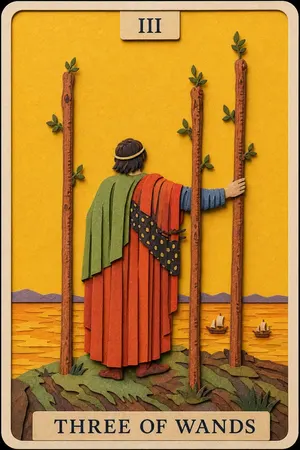
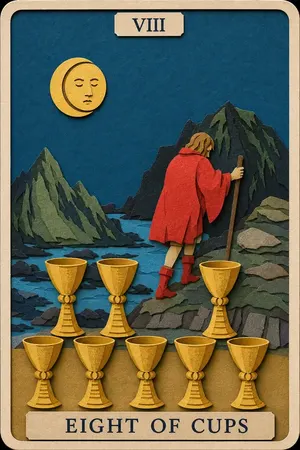
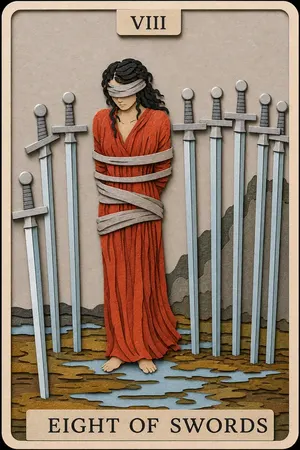
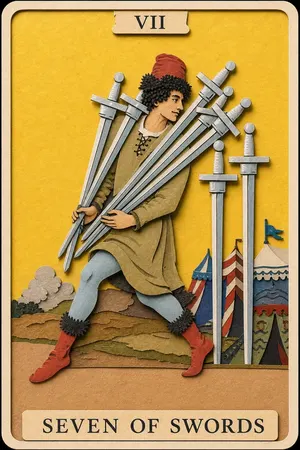
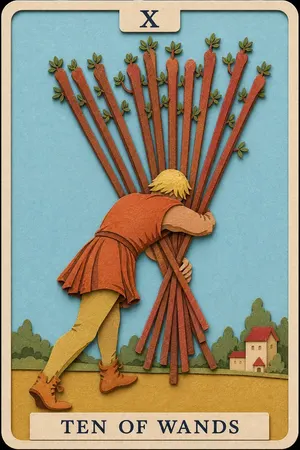
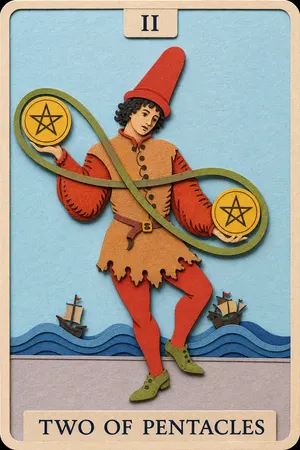
Colour notes are ours, read from the picture; Waite does not explain the colours.
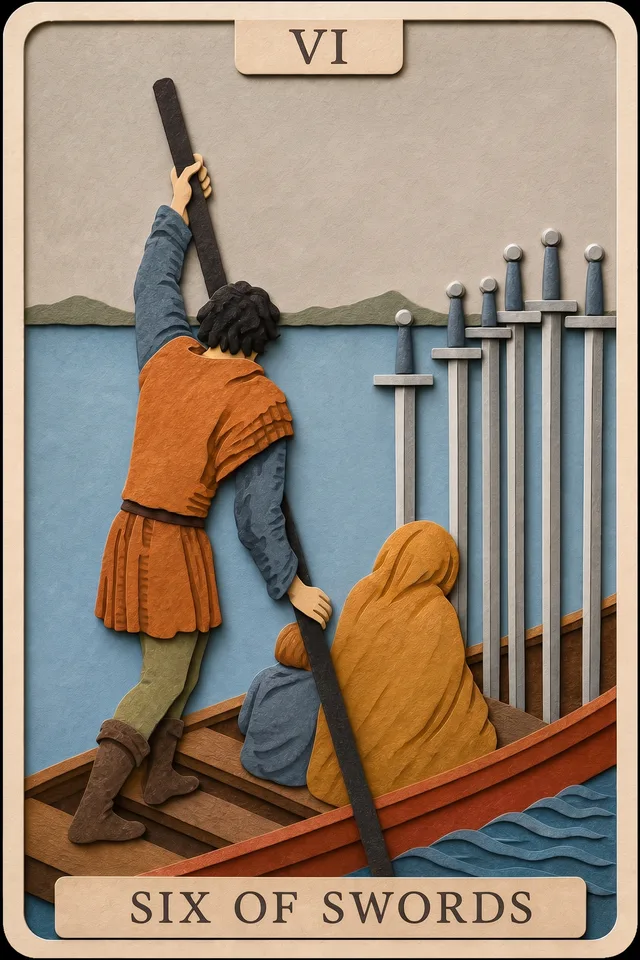
Six of SwordsUpright
A passage from a hard place to a calmer one. Waite's words: journey by water, route, way, envoy, expedient. A real trip, a move, or leaving a painful time behind.
The mood is quiet, a little sad, and hopeful. You don't have to fix everything before you go. Get in the boat.
Six of SwordsReversed
Waite's words: declaration, confession, publicity. One account, he adds, calls it a proposal of love.
Something hidden gets said out loud. The trip may wait while a truth comes out, or someone makes a heartfelt offer.
Yes or noYes.
Yes, slowly. Things move in a better direction, even with some sadness on board.
Six of Swords in your lifeIn your life
Love
Leaving a painful relationship behind, or getting through a hard time together toward calmer water.
Work
A move, a new post, a change of direction. Slow and steady.
Money
Things slowly improve. Travel light and steady.
Health
A slow recovery. A card can't diagnose you; if something's wrong, see a doctor, and accept help.
Spirituality
A quiet passage to a new stage. Let someone guide you for a while.
Advice
Leave what hurts behind. Pack your troubles and keep moving.
As a person
A steady helper who carries others through hard times.
Past, present, future
Past: a hard time left behind. Present: a passage or a move. Future: calmer water and a new shore.
Written by us, from Waite's meanings and the picture.
Symbols and correspondencesAt a glance
- Suit
- Swords
- Element
- Air
- Astrology
- Mercury in Aquarius
- Sephira
- Tiphareth
- Upright
- Journey
- Reversed
- Declaration
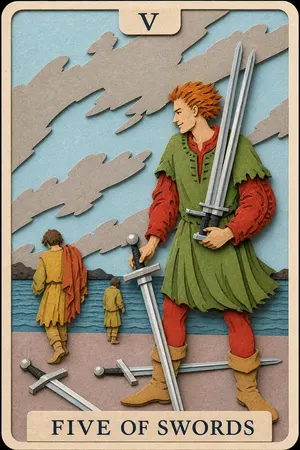
QuestionsCommon questions
Mostly yes: away from trouble, toward calmer days, with some sadness on the way.
Moving on from a painful relationship, or a couple leaving a hard time behind. Reversed, one account calls it a proposal of love.
Yes, slowly. You're headed the right way.
Waite calls it a punt, poled by a ferryman to the further shore. The course is smooth, he says: a journey away from trouble, well within reach.
It can. Waite's first meaning is journey by water. It also covers inner journeys, from one stage of life to the next.
Waite sees a ferryman poling passengers to the further shore over smooth water: a journey by water, a route, a way.
The Pictorial Key to the Tarot, 1911Card meanings and quotes: A. E. Waite, The Pictorial Key to the Tarot, 1911. Element, decan and sephira: the Golden Dawn's Book T. Colours, life situations, yes or no and questions: written by us, from Waite's meanings and the picture.
All 14 Swords