III, Suit of WandsThree of Wands tarot card meaning
Upright and reversedThree of Wands in shortIn short
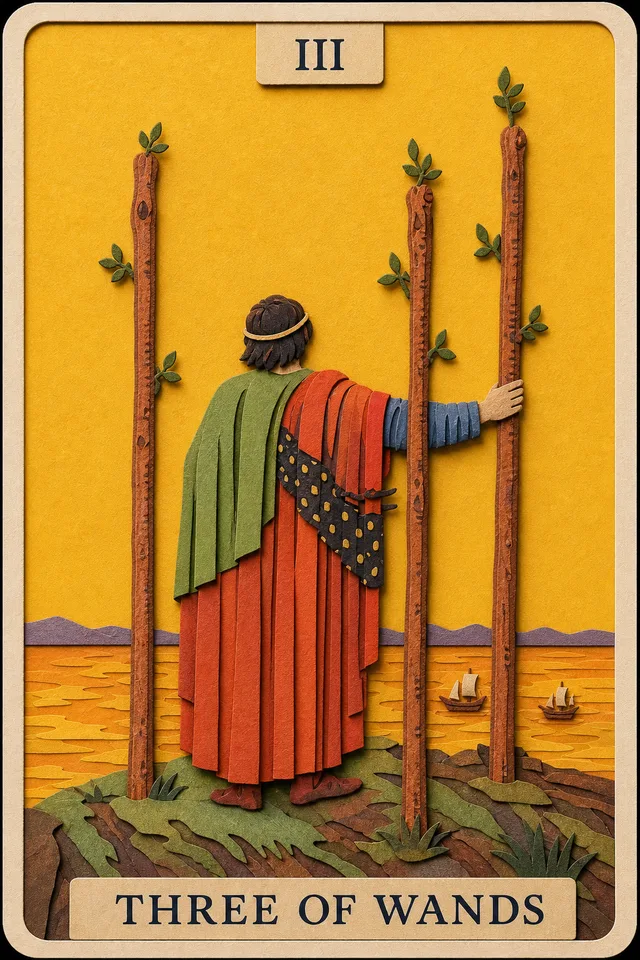
The Three of Wands looks ahead. A man stands on a cliff, back turned, one hand on a staff, watching ships cross a golden sea. His plans are under way. He waits for them to come home.
- Expansion
- Enterprise
- Foresight

Piece oneThe ships
Two small ships cross the sea below. Waite says they're his, carrying his goods. He sent them; now he watches and waits.
"...those are his ships, bearing his merchandise, which are sailing over the sea."Waite, 1911
Why it is hereThe ships are his plans, already under sail. He sent them out, and the card catches him in the middle of waiting. They give the merchant a reason to stand at the cliff's edge: he's watching an investment travel. Small on a wide sea, they show how much is out of his hands now.
Piece twoThe cliff's edge
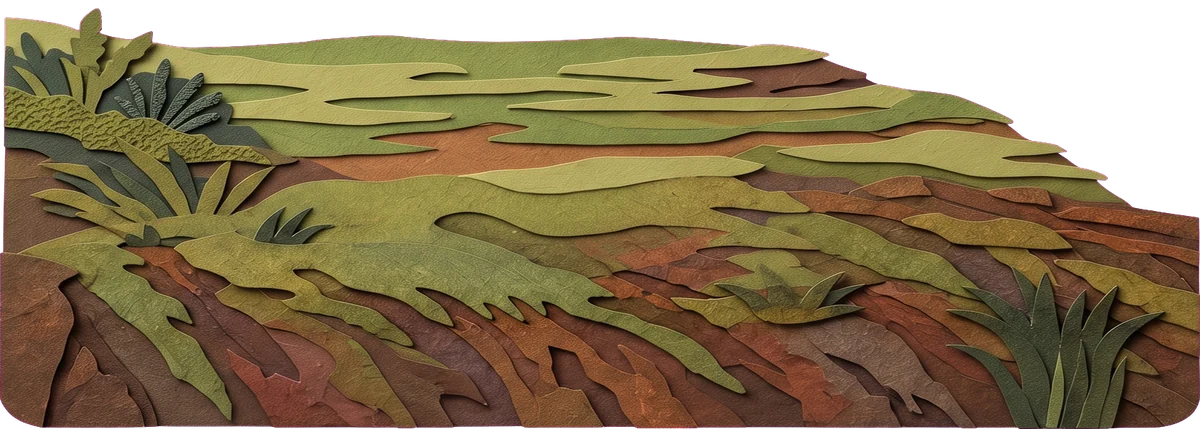
He stands at the cliff's edge above the sea, where Waite puts him. He's climbed as high as he can. Now he waits.
"...looking from a cliff's edge at ships passing over the sea."Waite, 1911
Why it is hereThe cliff is as far as he can go on foot. Past it the sea takes over, and only the ships can continue. He has climbed high enough to see the whole route. The staff he leans on keeps him steady at the edge, and the ground under him is the one fixed thing on the card.
Piece threeThe merchant
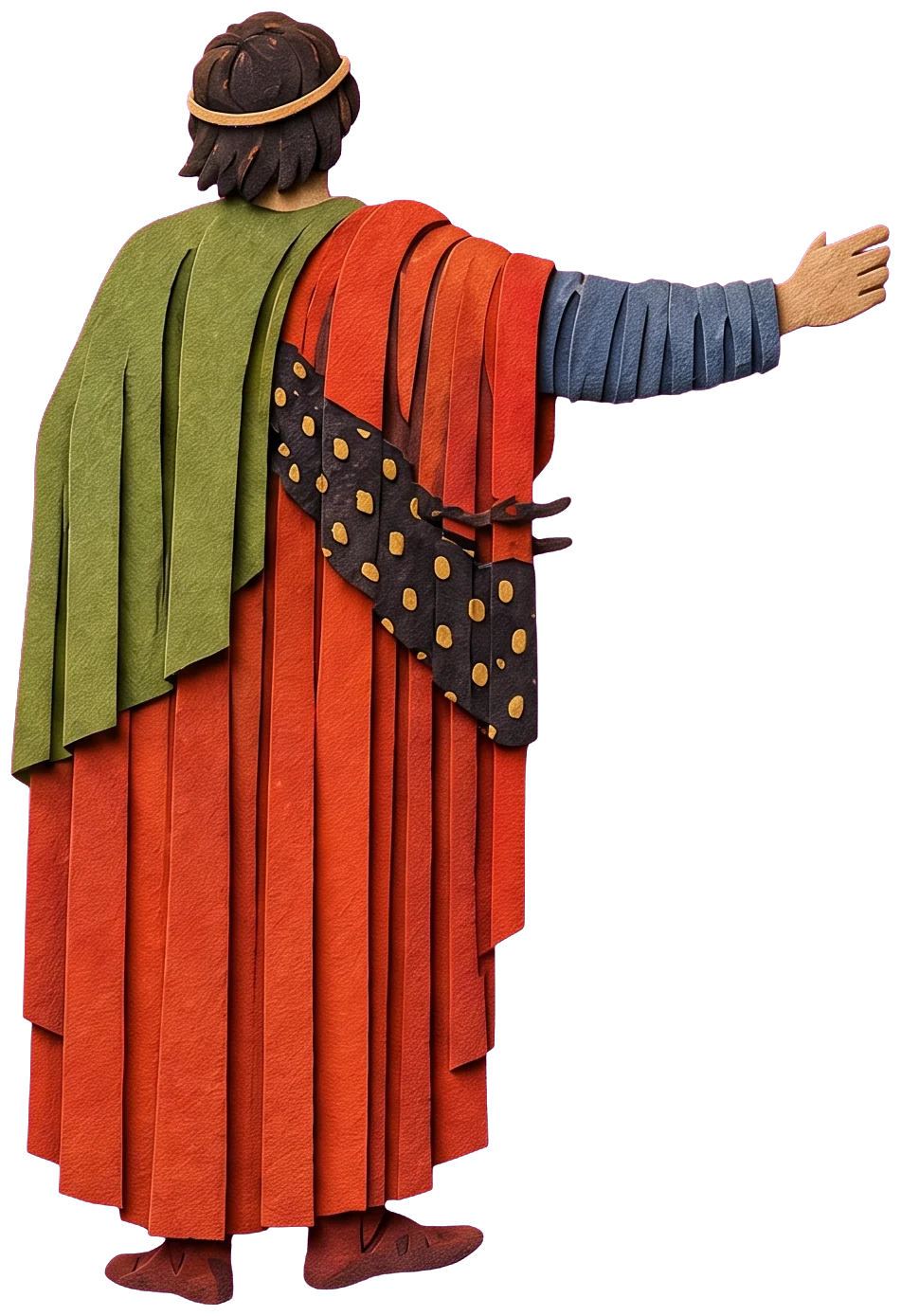
A calm, solid man stands with his back to you, so you look where he looks. Waite calls him established strength, enterprise, trade: a merchant prince who might turn and help you.
"A calm, stately personage, with his back turned..."Waite, 1911
Why it is hereHe turns his back so you share his view. The card asks you to look where he looks, at the ships and the sea. He stands steady, robe and cloak heavy, a man who built something and sent it out. One hand rests on a staff, so his calm has a support under it.
Piece fourThe hand on the staff
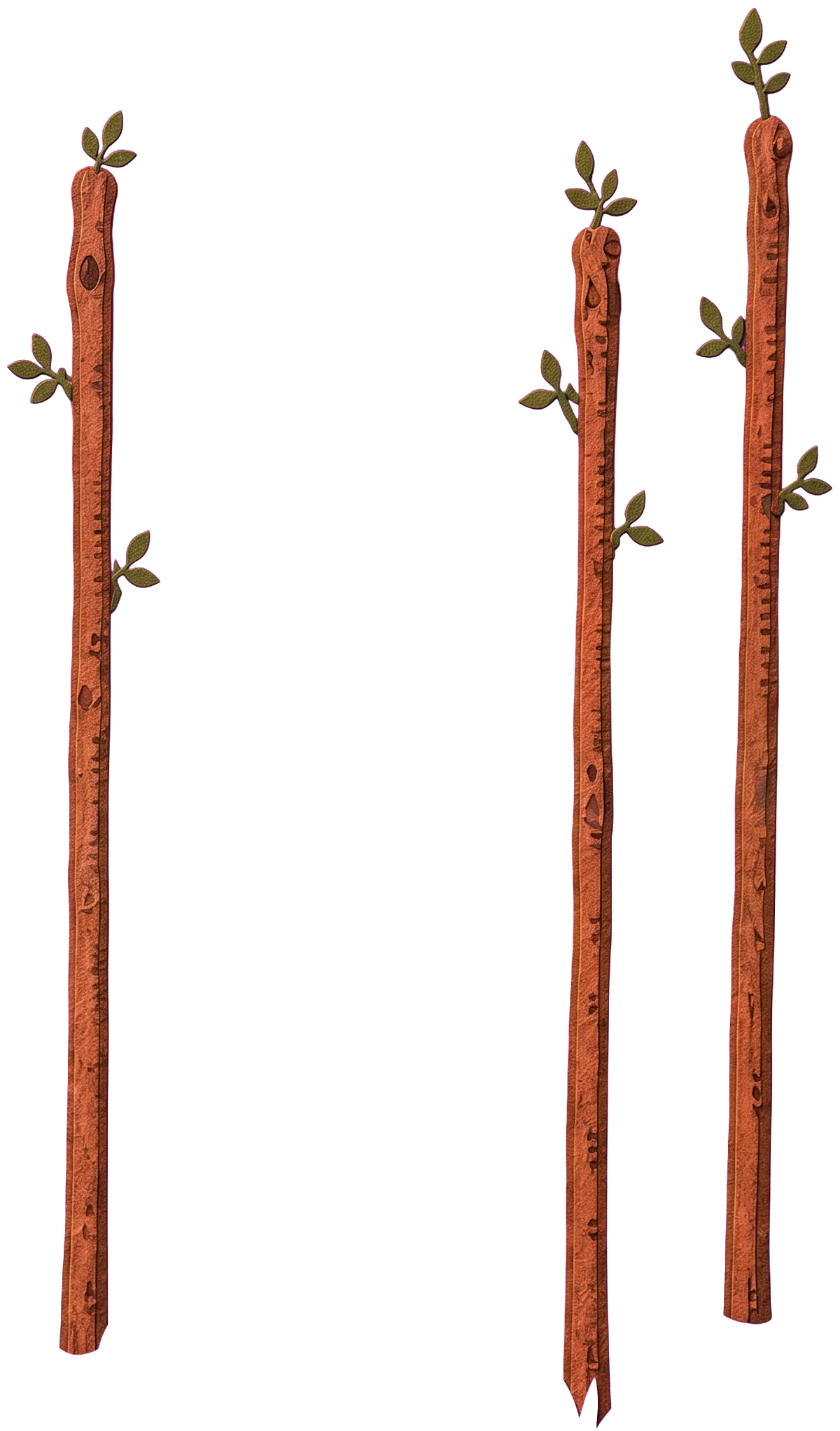
One hand holds a staff planted in the ground, one of three. Waite says he leans on it slightly. The work he's done holds him up.
"Three staves are planted in the ground, and he leans slightly on one of them."Waite, 1911
Why it is hereThe staff holds him up while he waits. He leans on it lightly, so the work he's already done supports him while the ships are away. It is one of three planted wands, a small fence of effort around him. The hand also keeps him anchored at the cliff's edge.
Colour, and where else it appearsEchoes
-
The ships
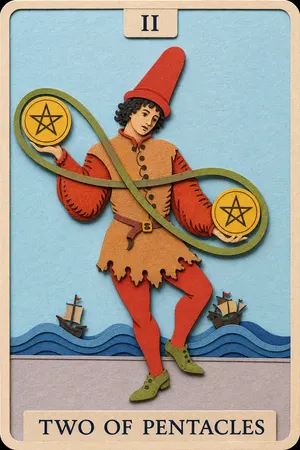
Brown ships on an orange and gold sea, the water glowing like the sky. Ships cross the waves behind the juggler in the Two of Pentacles, riding high swells while he keeps two coins moving. In the Six of Swords a ferryman poles a boat of passengers toward a far shore. Here the ships carry goods, and their owner stays on land.
-
The cliff's edge
Dark earth and grass underfoot, a hot orange sea below: solid ground and the open unknown. The Fool stands at a cliff edge too, head up, about to step off with his dog at his heels. The merchant plants his staves and stays where he is, eyes on the water. The edge is the same; the plan differs.
Also in -
The merchant
Red robe, green cloak: fire, and what grows from it. The red comes over from the Two of Wands, where a man in deep red looked out from behind a castle wall. The green cloak and the dotted blue panel are new. Here the man has walked out into the open, with the colour of growing things over his shoulder.
Also in -
The hand on the staff
A blue sleeve against yellow sky, a cool note where he touches his work. Green shoots on the staff say the work is still alive. The Hermit leans on a long staff too, alone at the top of his mountain with a lamp held out. The merchant leans on his and looks outward at trade and ships. Both have climbed, and they want different things from the view.
Also in
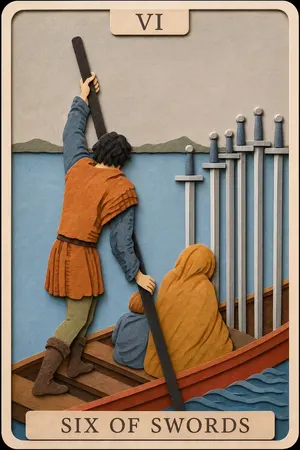
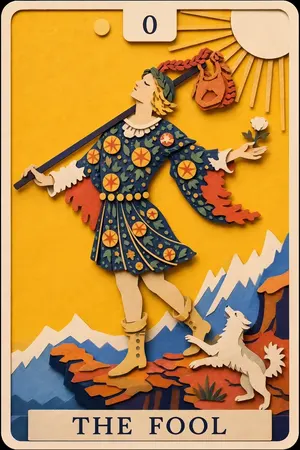
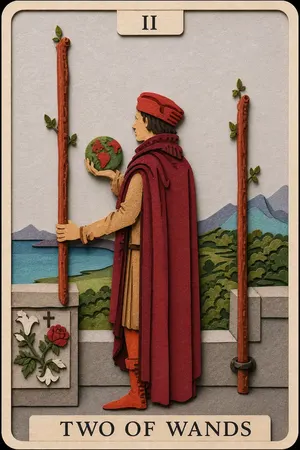
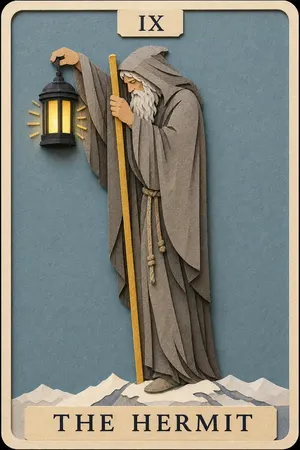
Colour notes are ours, read from the picture; Waite does not explain the colours.
Three of WandsUpright
Enterprise under way. Waite's words: established strength, enterprise, effort, trade, commerce, discovery. You did the work and sent it out.
Waite adds able co-operation in business, as if the successful merchant were looking your way to help. Good for travel, trade, partners, and patience.
Three of WandsReversed
Waite gives this reversal a kind meaning: the end of troubles, suspension or cessation of adversity, toil and disappointment.
A hard stretch is ending. The payoff may still be coming, and the worst of the struggle is behind you.
Yes or noYes.
Yes. Your plans are moving. Give them time.
Three of Wands in your lifeIn your life
Love
A growing relationship, maybe one across a distance. Look ahead together.
Work
Expansion, trade, travel, partners. Your work is out there. Give it time to come back.
Money
Investments and trade start to move. Patience pays better than pushing.
Health
Steady progress after effort. A card can't diagnose you; if something's wrong, see a doctor.
Spirituality
A wider horizon. Read, travel, look at other traditions.
Advice
You've done your part. Watch the horizon and accept help when it comes.
As a person
Confident, far-sighted, enterprising. Thinks big, plans long.
Past, present, future
Past: plans you set moving. Present: waiting for them to land. Future: growth, travel, or a helpful partner.
Written by us, from Waite's meanings and the picture.
Symbols and correspondencesAt a glance
- Suit
- Wands
- Element
- Fire
- Astrology
- Sun in Aries
- Sephira
- Binah
- Upright
- Established strength
- Reversed
- Cessation
QuestionsCommon questions
Yes. Enterprise, progress, help in business. Even reversed, Waite reads it as the end of troubles.
A relationship that's growing and looking ahead, sometimes across a distance. Plan the future together.
Yes, with time.
Waite says they're the man's own ships, carrying his merchandise. They're the work he sent out, still on its way.
The Sun in Aries, the second decan of Aries, in the Golden Dawn system. Fire is its element, Binah its sephira.
Waite calls him established strength and enterprise. The ships are his, and he may be looking your way to help.
The Pictorial Key to the Tarot, 1911Card meanings and quotes: A. E. Waite, The Pictorial Key to the Tarot, 1911. Element, decan and sephira: the Golden Dawn's Book T. Colours, life situations, yes or no and questions: written by us, from Waite's meanings and the picture.
All 14 Wands